
主催:地盤工学会 時期:2025/12/2 開催地:東京 担当部署:国際部
地盤工学会国際部では,第5回国際講演会としてKok-Kwang Phoon教授(Singapore University of Technology and Design)を講師にお招きします.Phoon教授は地盤工学における信頼性設計や不確実性の評価,機械学習に関する研究で顕著な業績を残されており,この分野で最もアクティブかつ影響力のある研究者です(ご実績やご経歴に関しては,次頁の英文をご覧ください).今回の講演では,データに基づく地盤特性の把握に関する研究,とくに不確実な地盤データの中からサイト特性をどのように取り出すか,について最近の研究成果をご紹介いただきます.地盤特性の把握は,地盤工学の問題の中で最も機械学習が用いられている問題であり,現在,最もホットな研究トピックです.地盤データの不確実性の評価や機械学習に関心のある会員はもとより,日常業務で地盤のデータを扱われている会員にとっても有益な内容となっております.奮ってご参加ください。
日 時 :2025年 12月 2日(火) 15:30 ~ 17:00
場 所 :地盤工学会地階会議室(東京都文京区千石4丁目38番2号)およびZoomによるオンライン
定 員 :対面40名程度(会員限定),オンライン(会員・非会員)
※対面は参加者数に上限があるため、登録の先着順とさせていただきます。
参加費 :無料
申込方法:2025年11月25日(火)までに下記フォームにてお申込みください。
申込フォーム:受付終了
ZoomのURL等、当日の参加方法等につきましては、11/25(火)の申込締切日以降にメールにてご案内いたします。
講 師 :Kok-Kwang Phoon教授(Singapore University of Technology and Design)
講演題目:How to draw a geotechnical “site”
講演者紹介: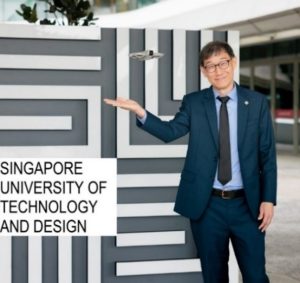
PHOON Kok-Kwang is President, Singapore University of Technology and Design (SUTD), as well as Cheng Tsang Man Chair Professor. Concurrently, he is serving as the Deputy Executive Chair (Research) of AI Singapore and a member of the Committee of Government Scientific Advisors. He has also served as the Deputy Chief Scientific Advisor (DCSA) to the National Research Foundation, Prime Minister’s Office, Singapore. He has been elected to serve on the board of the International Council of Academies of Engineering and Technological Sciences (CAETS), 2026-2027. Prof Phoon is a world leader in the development of reliability and data-centric geotechnics. He was bestowed the ASCE Norman Medal twice in 2005 and 2020, the Humboldt Research Award in 2017, the Harry Poulos Award in 2023, and the Alfredo Ang Award in 2024 among other accolades. Prof Phoon is the Founding Editor of Georisk and Founding Editor-in-chief of Geodata and AI.
講演内容:
One important challenge in data-driven site characterization (DDSC) is the “site recognition challenge”. It shares some similarities with the facial recognition challenge. The purpose of recognizing “similar” sites is to allow a target site data to be supplemented by relevant data collected elsewhere to improve decision making at the target site. This is already widely adopted in geotechnical engineering practice. The key difference is that “similar” sites are identified based on judgment. The problem with judgment is that it is restricted to local/regional data that an engineer is familiar with arising from prior experience working under similar ground conditions. It is impractical to exercise judgment on big data, say to process a trillion soil records. Judgment is arguably less applicable to ground conditions outside of an engineer’s experience base. The tailored clustering has been shown to be more effective than classical clustering (reference solution) in identifying “similar” sites from big indirect data (BID). However, all DDSC methods face a fundamental limitation: their reliance on geotechnical project boundaries as the primary site definition. This definition is purely based on convention as it is evident that project boundaries are not related to geology or geotechnical properties. Project boundaries are more related to real estate development. This lecture shows that it is possible to redraw the boundaries of “similar” sites based on geology/geotechnical data so that decision making at a target site is optimized. The concept of a data-driven demarcated site is novel and may open new research possibilities for DDSC.
※録画録音、参加URLの無断共有は固く禁止させていただきます。
お問合せ先 :公益社団法人地盤工学会 国際部担当
E-mail:kokusai★jiban.or.jp (★を@に変えて送信してください)